
Website Design Trends 2025: Impact on User Experience
Website design in 2024/2025 plays a crucial role in achieving success in the digital space. An appealing, modern, and functional design not only ensures a positive User Experience (UX) but can also significantly contribute to conversion rates and brand perception. In recent years, numerous website design trends have emerged that influence both the aesthetics and functionality of websites. This article provides a comprehensive overview of current trends, compares different design styles with example websites, and explains how they improve user experience.
Why Website Design Trends Matter
Website design trends are not just fashionable phenomena but reflect the changing needs and expectations of users. A current design signals professionalism, relevance, and adaptability, which strengthens visitor trust and increases the likelihood of conversion.
- Improved Usability: Modern designs are often more user-friendly and facilitate navigation.
- Enhanced Brand Perception: A trendy design can position your brand as innovative and relevant.
- Increased Conversion Rates: Optimized layouts and interactions help visitors become customers faster.
Which Website Design Trends Are Shaping User Experience in 2025?
1. Minimalist Design with Maximum Impact
The trend toward minimalist design has continued to strengthen in recent years. Clean, simple layouts with plenty of white space and few but well-thought-out design elements dominate many modern websites. Minimalism aims to optimize user guidance by focusing on the essentials and eliminating unnecessary distractions.
Impact on User Experience:
- Faster Loading Times: Fewer graphics and elements prevent page overload.
- Clarity and Structure: Helps users orient themselves quickly.
- Focused User Experience: Users are not overwhelmed by too many elements.
Example Website: Apple
2. Dark Mode: Function and Aesthetics Combined
Dark Mode is far more than just a visual gimmick. More and more websites offer users the option to switch between light and dark designs. Dark mode is not only aesthetically pleasing but also functional. It reduces eye strain during long screen sessions and improves readability in low-light environments.
Impact on User Experience:
- Better Readability: Reduces eye strain in dark environments.
- Aesthetically Pleasing: Creates a modern, futuristic appearance.
- Energy Savings: Extends battery life on OLED displays.
Personally, I find dark mode more comfortable for my eyes when working at a screen. That's why our entire website is designed in dark mode.
Example Website: Spotify
4. Asymmetric Layouts and Broken Grid Design
Traditionally, website designs often follow a grid layout where content is presented symmetrically in organized blocks. However, the current trend is moving toward asymmetric layouts and so-called Broken Grid Designs. These layouts deliberately break with symmetry to create a more creative and dynamic appearance.
Impact on User Experience:
- Uniqueness and Creativity: Gives the page more personality.
- Attention-Grabbing: Makes certain content stand out more.
- User Navigation Challenge: Must be well-planned to avoid confusion.
Example Website: Dada Data
5. Large Typography
Large, bold fonts are a central design element in many modern designs. They are not just an aesthetic statement but also help convey clear messages without overwhelming users with too much text.
Impact on User Experience:
- Quick Information Capture: Important information at a glance.
- Strong Visual Impact: Conveys a powerful brand message.
- Improved Legibility: Well-chosen fonts enhance readability.
Example Website: Hello Monday
6. 3D Designs and Immersive Elements
Example Website: Cuberto
With more powerful hardware and advanced web technology, 3D elements and immersive designs are increasingly common on websites. Whether interactive 3D models, animations, or Virtual Reality (VR) content, these visual experiences offer an entirely new level of user interaction.
Impact on User Experience:
- Deeper Immersion: Allows for more exciting interaction.
- Visual Hierarchy: Highlighting specific content through depth and dimension.
- Potential for Higher Loading Times: Optimization is necessary to keep loading times low.
7. Personalization and Dynamic Content
The desire for personalized user experiences continues to grow. Modern websites dynamically adapt their content to user preferences based on behavior or data such as location, language, or previous interactions.
Impact on User Experience:
- Relevance: Content addresses user needs more directly.
- Engagement: Promotes user engagement through relevant content.
- Higher Conversion Rates: Tailored content increases conversion rates.
Example Website: Amazon
You might also be interested in:
"The best design trend is the one users never notice — because everything works so naturally that they focus only on the content." — Jamin Mahmood-Wiebe, Founder of IJONIS
8. Mobile-First Design and Progressive Web Apps
Since the majority of internet traffic comes from mobile devices, many designers focus on the Mobile-First approach. This includes responsive layouts and the development of Progressive Web Apps (PWAs), which offer app-like experiences without requiring an actual app download.
Impact on User Experience:
- Optimized Mobile Usage: Seamless user experience on smartphones and tablets.
- Faster Loading Times: PWAs often offer faster loading times and better offline functionality.
- User-Friendliness: Intuitive navigation specifically designed for smaller screens.
While I strongly support Mobile First, from a purely aesthetic perspective, I find it somewhat disappointing since most websites simply look better on desktop. There's much more space available, which makes designs feel less cramped from the start.
Example Website: IJONIS
9. Neumorphism
Neumorphism is a modern design direction that combines elements of Flat Design and Skeuomorphism. Through subtle shadows and light effects, design elements appear three-dimensional yet minimalist.
Impact on User Experience:
- Aesthetic Depth: Creates a sculptural effect without overload.
- Clarity: Maintains minimalist clarity.
- Interactivity: Promotes visual interaction through realistic effects.
If you're curious, our contact form below is also designed in this style. Here's also a nice generator for Neumorphism: Neumorphism.io
10. Glassmorphism
Glassmorphism uses transparent or semi-transparent elements with blurred backgrounds that look like frosted glass. This technique creates a modern, elegant aesthetic that conveys depth and lightness.
Impact on User Experience:
- Transparency: Creates an open and light user interface.
- Visual Hierarchy: Highlights certain elements through transparency.
- Elegance: Conveys a modern and stylish brand identity.
Example Website: Designcode
11. Brutalism
Brutalism in web design is characterized by raw, unpolished elements and unconventional aesthetics.
Impact on User Experience:
- Rawness and Authenticity: Creates a unique and unconventional look.
- Direct Communication: Clear, direct messages without distractions.
- User Engagement: Reaches a specific audience that appreciates this style.
Example Website: Bloomberg
12. Neobrutalism
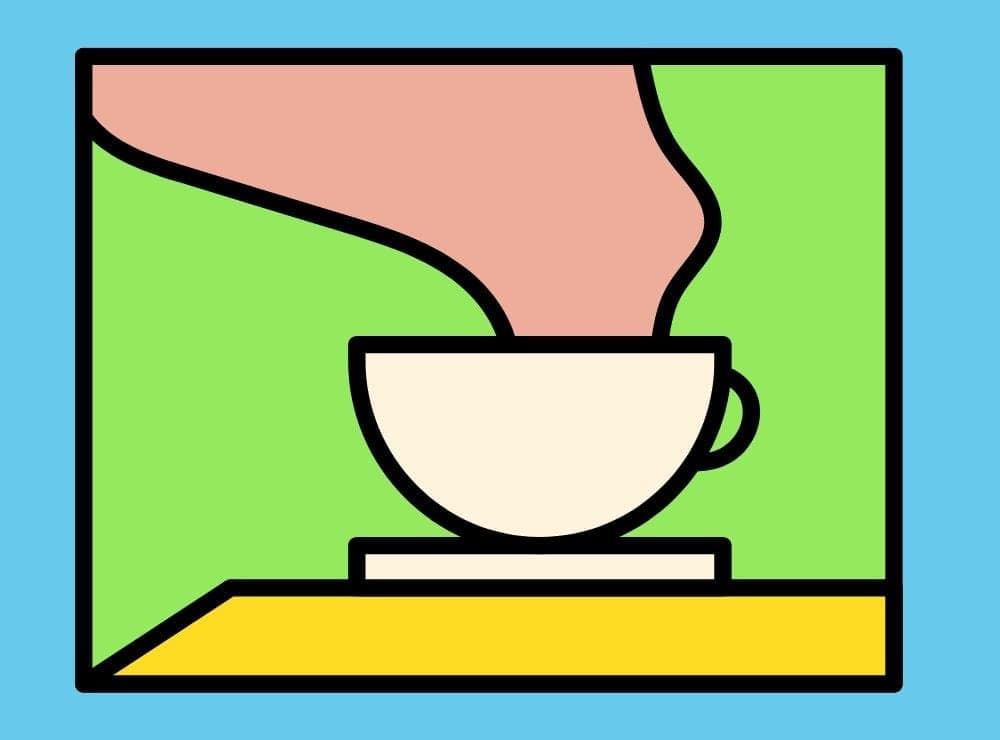
Neobrutalism is one of my favorite design styles. An evolution of Brutalism, it combines the raw aesthetic with modern design elements. This style relies on clear structures, bright colors, and sharp-edged boxes to achieve deliberate simplicity.
Impact on User Experience:
- Modern Interpretation: Brings the raw aesthetic into contemporary design.
- Structured Clarity: Gives the website a clear and organized structure.
- Visual Contrasts: Uses strong contrasts to highlight important content.
Example Website: Gumroad
"Trends come and go — but load time and usability stay. Any trend that hurts your Core Web Vitals costs you more customers than it gains you in aesthetics." — Jamin Mahmood-Wiebe, Founder of IJONIS
How Do Different Website Design Trends Compare?
To better understand the different website design trends, let's compare some of the styles mentioned above using example websites:
| Design Trend | Characteristics | Example Website |
|---|---|---|
| Minimalism | Plenty of white space, clean lines, simple layouts | Apple |
| Dark Mode | Dark background, bright accents, easy on the eyes | Spotify |
| Micro-interactions | Subtle animations, hover effects, feedback mechanisms | Slack |
| Asymmetric Layouts | Unconventional placement, creative grid breaks | Dada Data |
| Large Typography | Oversized fonts, strong visual impact | Hello Monday |
| 3D Designs | Interactive 3D models, immersive elements | Cuberto |
| Personalization | Dynamic content, tailored to user behavior | Amazon |
| Mobile-First Design | Responsive layouts, optimized for mobile devices | IJONIS |
| Neumorphism | Subtle shadows, sculptural effects, minimalist | Neumorphism.io |
| Glassmorphism | Transparent elements, blurred backgrounds | Designcode |
| Brutalism | Raw, unpolished elements, direct communication | Bloomberg |
| Neobrutalism | Modern interpretation of Brutalism, clear structures | Gumroad |
Design Trend Impact Matrix
Analysis based on IJONIS project data and industry UX research. Performance impact measured via Lighthouse scores across Hamburg-based client projects.
When choosing trends for your business website, prioritize those with high UX impact and positive (or neutral) performance impact. A beautiful design that slows your site below a 90 Lighthouse score will hurt conversions more than it helps.
Related Articles
If you want to dive deeper into specific aspects of web design, check out these articles:
- Web Design Trends 2026 — The 8 most important web design trends for 2026: AI-powered design, organic layouts, living typography, and more.
- Website Design for Startups — From idea to professional online presence: what founders should consider.
- Farm Website Design — How agricultural businesses attract new customers with targeted web design.
- Website for Doctors — Design requirements and best practices for medical websites.
- Webflow vs. WordPress Comparison — Which platform is better suited for modern web design?
- From Etsy to Your Own Online Shop — How to make the leap from marketplace to your own e-commerce presence.
- Building a WordPress Marketplace for Online Courses — A case study on creating a scalable course platform with WordPress.
Frequently Asked Questions
Which website design trend has the biggest impact on conversion rates?
Personalization and dynamic content consistently deliver the highest conversion improvements. Websites that personalize user experiences based on behavior and preferences see conversion rate increases of 10% to 30% compared to static designs.
Is dark mode just a trend or here to stay?
Dark mode has become a permanent feature in modern web design. Over 80% of users prefer having the option to toggle dark mode, and major platforms like Apple, Google, and Spotify have adopted it as a standard interface option.
Should I redesign my website every year to follow new trends?
A full redesign every year is unnecessary and often counterproductive. Instead, focus on incremental updates that improve user experience without disrupting brand consistency. Most successful businesses refresh their design every 2 to 3 years while making smaller UX improvements continuously.
How Do You Implement the Right Design Trends for Your Business?
The bottom line: the current website design trends of 2024/2025 are not only visually appealing but also significantly improve User Experience and help businesses optimize their online presence. Whether it's implementing a minimalist design, providing personalized content, or integrating new technologies like 3D elements, the right implementation of these trends can make the difference between an average and a successful website.
Our Hamburg-based team supports you in identifying the right website design trends for your business and integrating them into your website. We focus not only on aesthetics but also on functionality and user-friendliness. From planning to technical implementation to optimization, we guide you through every step.